Investment in a heat pump
Heat pumps vs. photovoltaics
It is very possible that, when considering investing in photovoltaics for your home, you have come across information about how a heat pump works well in tandem with a PV installation as a heat source.
This is due to the fact that the heat pump is powered only by electricity, the demand for which can be fully covered by photovoltaic panels and, with proper design of the pump heating system together with photovoltaics, the maintenance costs of the house can be reduced to a few hundred zloty per year.
What are heat pumps?
Heat pumps are devices that use externally supplied mechanical energy to force heat from a lower-temperature medium to a higher-temperature medium. This is usually done by means of an electrically powered compressor. By using this process, a heat pump is able to achieve much higher efficiency than traditional solid fuel heat sources without emitting any pollutants. On average, a correctly sized, state-of-the-art unit generates approximately 4 kW of energy for the home per 1 kW of electricity input. The diagram below illustrates how heat circulates from the lower heat source (air, ground or water) to the heating system in a house.
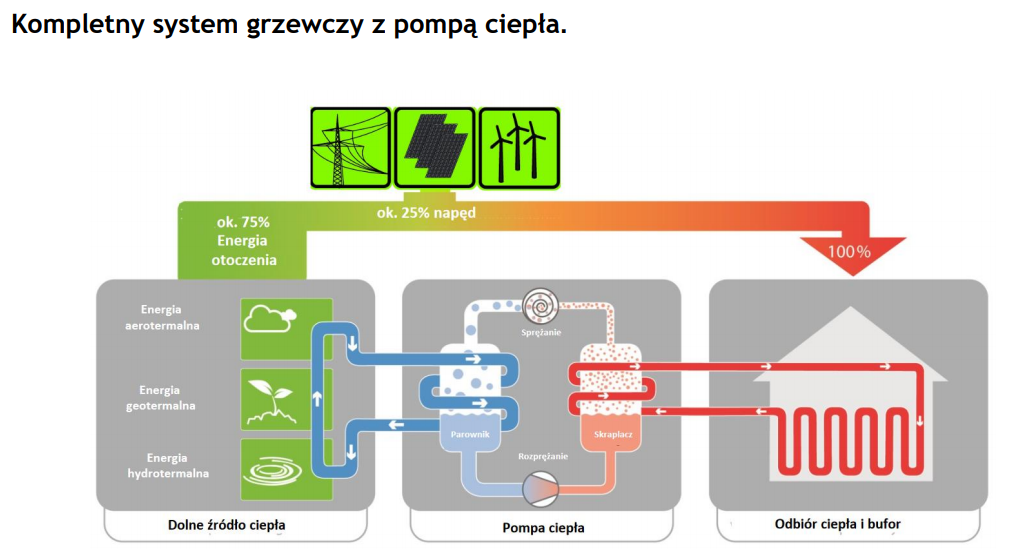
Source: NIBE-BIAWAR
R
Types of heat pumps
Most commonly, we divide heat pumps according to the type of lower heat source, i.e. the medium from which we 'pump out' heat for our home. As can be seen from the diagram above, we can distinguish between three basic heat sources: air, ground and water.
All types of heat pumps use the same processes to generate heat, but there are big differences between them in terms of installation, price and performance. On the Polish market, air and ground pumps are the most popular.
Air source heat pumps - as the name suggests, they use the energy stored in the atmospheric air, which is used to heat water for domestic use and heating, or directly to heat the air in the building. They most commonly consist of an outdoor unit in the form of a fan and compressor and an indoor unit with an evaporator and condenser. Their unquestionable advantage is their lower investment cost than ground-source pumps.
Ground source heat pumps - This type of pump extracts energy from the ground. To recover the heat stored in the ground, a collector must first be made. A distinction is made between horizontal collectors, in the form of a pipe laid in the ground below the frost zone, and vertical collectors, i.e. boreholes several tens to over a hundred metres deep in which the pipes are placed. This type of heat pump is generally more efficient than air source heat pumps and works better when the outside temperature is low. However, they are significantly more expensive to purchase and install than air pumps due to the additional groundwork involved.
What are the main benefits of a heat pump installation?
By using modern equipment, it is possible in 100% to cover the heat demand for the building and dispense with additional heat sources. Depending on the solution used, the annual cost of heating and hot water for a building with an area of approximately 150m2 is between 1,500 and 2,000 PLN per year. It is also worth remembering that when building a new house with a heat pump, we avoid the costs associated with building a boiler room as well as the flue and ventilation chimney required for traditional heating boilers. In addition to the economic benefits, heat pumps are a much more environmentally friendly solution than heating a building with traditional solid fuel boilers. The pump only needs electricity to operate, which additionally gives the possibility of obtaining it from a photovoltaic installation and reducing the fees to a minimum.
Just as for a photovoltaic installation, you can also benefit from subsidies from the Clean Air Programme for a heat pump, which you will find out more about in our next post.