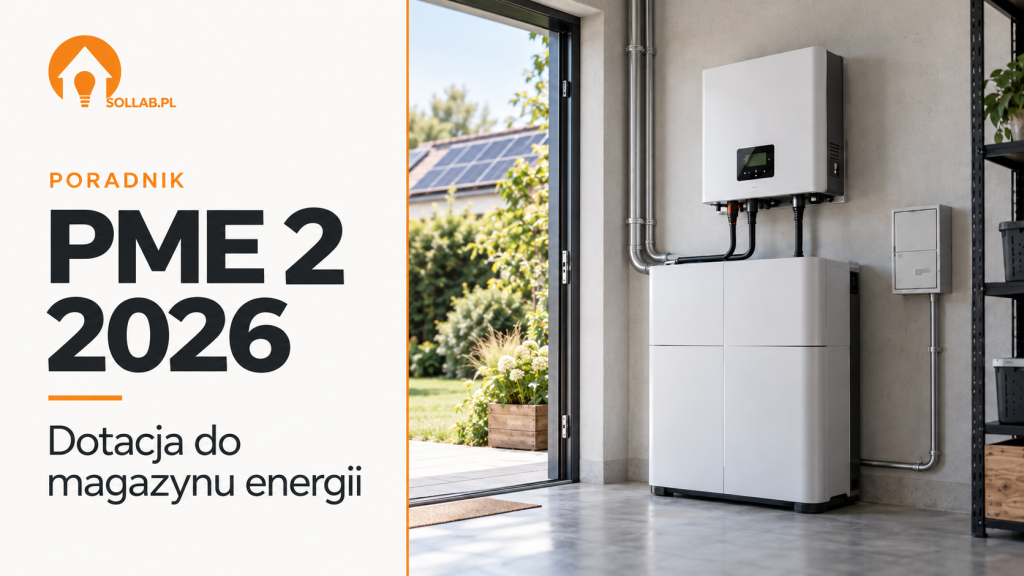
Energy storage – what determines the price and how do you choose a system?
The price of an energy storage system depends on the entire package: the battery, the inverter that works with it, the scope of installation and the features you wish to use. Therefore, simply comparing battery prices is not enough to assess the cost of the installation. At SOLLAB, we prepare a bespoke quote, tailored to the needs of your building and your existing solar panel system.
Take a look at our range energy storage facilities or see below for information to help you choose a system.
Home energy storage systems – how do they work and who might find them useful?
A home energy storage system is a battery that works in conjunction with a home’s electrical system. When combined with a solar panel system, it can store surplus electricity generated during the day so that the household can use it later, for example in the evening. In this way, it helps to increase the use of self-generated energy within the building.
This solution is worth considering when the solar panels generate a lot of electricity whilst the household is away, and the majority of consumption takes place after they return. Before selecting a system, you need to compare the actual surplus with the household’s demand. High annual consumption alone does not determine the required battery capacity.
The term „domestic” refers to the intended use of the storage unit, not to a requirement that it must be installed outdoors. Depending on the unit, a suitable location may be a utility room or a garage. Outdoor installation is only permitted if authorised by the manufacturer and the necessary conditions are met. The location, access for servicing and operating conditions must be determined during the preparation of the installation.
If the battery system is also to power selected devices in the event of a mains power failure, this function must be taken into account when selecting the system. It is not a standard feature of every battery.
What factors influence the cost of energy storage?
- Usable battery capacity — the amount of energy that can be utilised under specific operating conditions.
- Charging and discharging power — this affects how quickly the reservoir absorbs and releases energy.
- Inverters and device compatibility — Expanding an existing photovoltaic system may require different components to those needed for a new installation.
- Scope of installation work — the installation site, cable routing and the configuration of the switchboard are all important.
- Emergency power supply — requires a suitable system and may cover selected circuits or a wider range of loads.
- Warranty terms and expandability — it is worth comparing them alongside the technical specifications, rather than just the price of the device.
When comparing quotes, check that each one covers the same scope: the battery, inverter, safety devices, installation, commissioning and any emergency power supply system.
Capacity in kWh versus power in kW — how do they differ?
Capacity, expressed in kWh, describes the amount of energy. Power, expressed in kW, describes the rate at which it is transferred. These are two different parameters. A larger capacity does not automatically mean that the battery bank will be able to power more high-power devices at the same time.
It is also worth distinguishing between nominal capacity and usable capacity. When comparing appliances, you should check the manufacturer’s specifications and the conditions under which the stated values were determined.
How do you choose a battery for your home and solar panels?
The choice depends on your electricity consumption patterns. It is not only your annual consumption that matters, but also how much energy you need whilst the panels are generating power, and how much you need in the evening and at night. Data from the inverter and the meter can be helpful here.
It is also important to define the purpose of the investment: to make greater use of self-generated energy, to power selected appliances during a power cut, or to prepare the system for future needs. Plans to purchase an electric car or a heat pump may change the way energy is used. A larger storage system is not always the best choice — it should be suited to the operating conditions of the entire system.
Does the warehouse provide electricity in the event of a power cut?
Not every set has this feature. An emergency power supply requires compatible equipment, a suitable switching system and the correct installation configuration. It is necessary to determine in advance which loads are to continue operating in the event of a mains power failure and what power they require.
Their operating time depends, amongst other things, on the available battery power and the current power consumption. Simply having a battery is no guarantee that the whole house will be powered during a power cut.
What do I need to provide for a personalised quote?
Please provide us with details of your annual electricity consumption, any existing or planned photovoltaic systems, and the model of your inverter. If you have access to monitoring data, information on energy generation and consumption will also be useful. Please let us know if you require an emergency power supply and which devices you would like it to cover.
Ask SOLLAB for advice on selecting and pricing an energy storage system.
Frequently Asked Questions
Is it possible to add a battery storage system to an existing solar panel installation?
In many cases, yes, but the extent of the upgrade depends on the inverter and the other components of the system. Before choosing batteries, you need to check that they are compatible.
Does a larger warehouse mean greater savings?
Not automatically. The amount of surplus energy available, energy consumption patterns, the cost of the system and the billing terms are all important factors. The choice should be based on data relating to the specific installation.
Is the price of the battery itself the same as the price of the complete installation?
Not necessarily. The quote may need to include an inverter, installation, safety features or emergency power supply components. Always compare the scope of the entire package.